
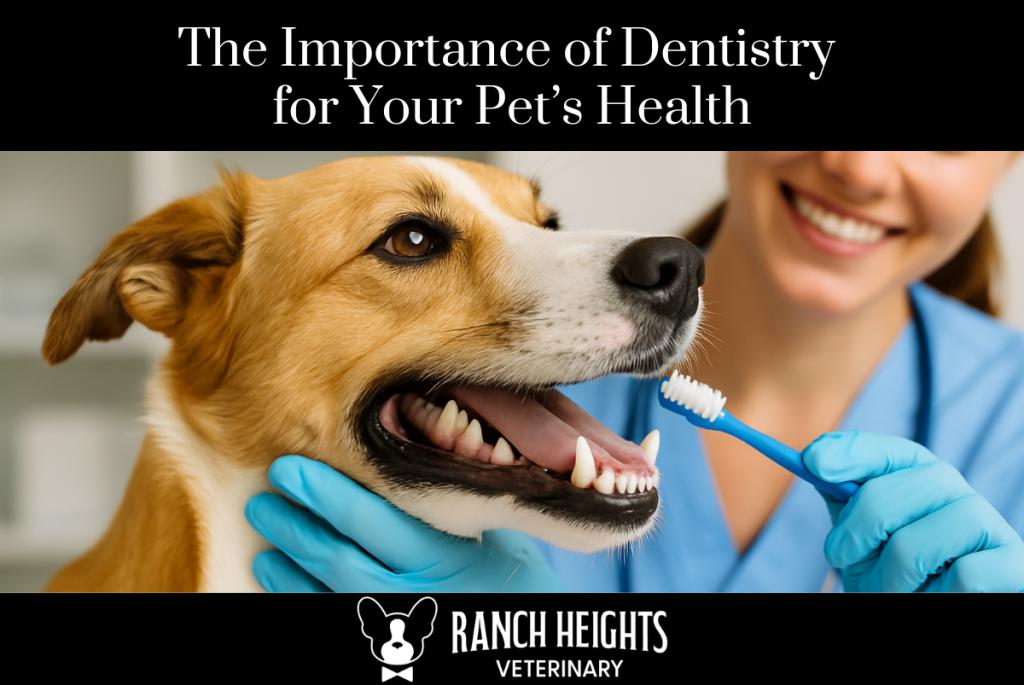
When it comes to your pet’s well-being, dental health often doesn’t receive the attention it deserves. However, just like in humans, oral health plays a vital role in your pet’s overall health. Poor dental hygiene can lead not only to bad breath and tooth loss but also to more serious systemic problems affecting the heart, liver, and kidneys. At Ranch Heights Veterinary, we are dedicated to ensuring your pets receive the dental care they need to live long, happy, and healthy lives.
Why Pet Dentistry Matters
Dental disease is one of the most common health issues in dogs and cats, with many pets developing some form of periodontal disease by age three. Plaque and tartar buildup harbor harmful bacteria, which can cause painful infections and even spread through the bloodstream to other organs. Regular dental care helps prevent these issues and keeps your pet’s smile—and overall health—bright.
Common Signs of Dental Problems
- Persistent bad breath
- Yellow or brown tartar buildup on teeth
- Red, swollen, or bleeding gums
- Difficulty eating, dropping food, or chewing on one side
- Pawing at the mouth or face
- Loose or missing teeth
If you notice any of these symptoms, it’s important to schedule a veterinary dental exam right away.
It is also important to note that dogs and cats can be very good at hiding pain and disease in their mouth, so they do not always have obvious symptoms. This is why routine dental exams are so important!
How We Help at Ranch Heights Veterinary
At Ranch Heights Veterinary, our comprehensive dental services include:
- Professional dental cleanings without the use of anesthesia
- Professional dental cleanings under anesthesia
- Digital dental X-rays to detect hidden issues
- Tooth extractions when necessary
- Pain management and preventive care plans
- At-home dental care guidance for pet parents
Q&A: Pet Dentistry at Ranch Heights Veterinary
Q: How often should my pet have a dental exam?
A: We recommend a regular dental exam and teeth cleaning without the use of anesthesia at least every 6 months. Pets with a history of dental disease or smaller breeds prone to dental problems may need more frequent checkups.
Q: Is anesthesia safe for dental cleanings?
A: Yes. We use modern anesthetic protocols and monitoring equipment to ensure your pet’s safety. Anesthesia allows us to thoroughly clean under the gumline and take X-rays without causing stress or pain.
Q: Can dental problems affect my pet’s overall health?
A: Absolutely. Bacteria from untreated dental infections can enter the bloodstream and damage organs such as the heart, liver, and kidneys. Preventive dental care reduces this risk significantly.
Q: What can I do at home to maintain my pet’s dental health?
A: Daily toothbrushing is the gold standard, but even brushing a few times per week makes a big difference. Additionally, dental chews, special diets, and water additives can help reduce plaque and tartar buildup.
Q: How do I know if my pet is in pain from dental disease?
A: Pets often hide pain well, but signs include reluctance to eat, drooling, pawing at the face, or changes in behavior. If you notice these, bring your pet in for an exam.
Contact Ranch Heights Veterinary
Ranch Heights Veterinary
📍 2651 Irvine Avenue STE 128
Costa Mesa, CA 92627
📞 Phone: (949) 630-3517
Protecting your pet’s oral health is one of the best ways to ensure their overall well-being. Call us today to schedule a dental exam and cleaning for your furry companion!