
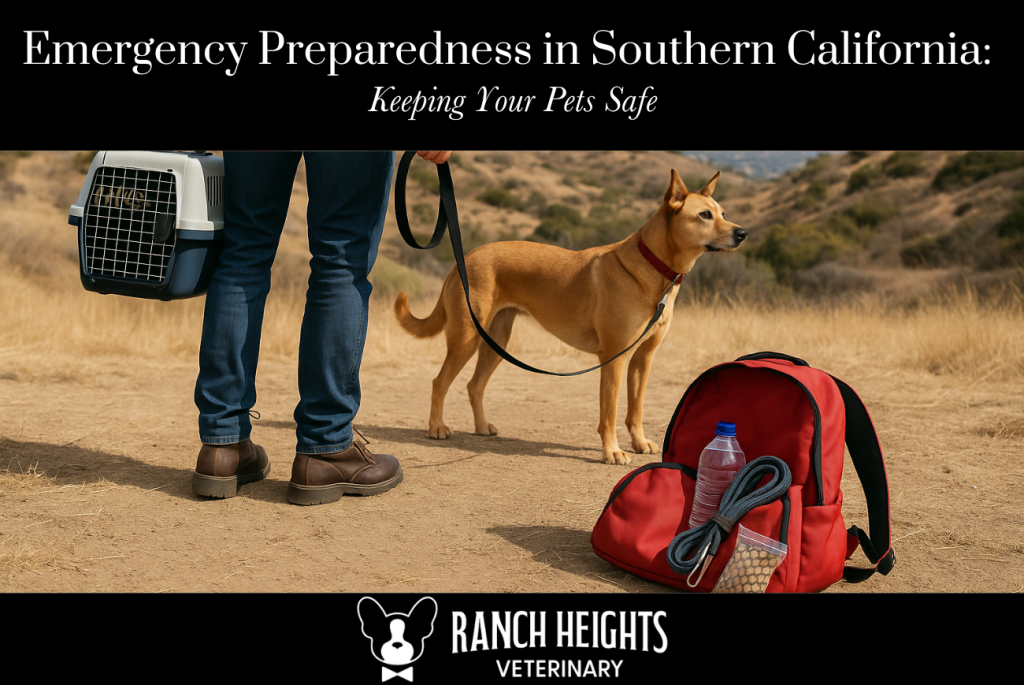
Southern California is known for its sunshine and beautiful landscapes, but it also comes with unique challenges such as earthquakes, wildfires, and seasonal storms. As pet owners, being prepared for emergencies is essential to ensure your furry family members remain safe and secure during unexpected events. At Ranch Heights Veterinary, we believe that emergency preparedness should always include your pets.
Why Emergency Preparedness Matters for Pets
Unlike people, pets rely entirely on their families during emergencies. Stressful events like evacuations, smoke from wildfires, or even aftershocks from an earthquake can cause fear, confusion, and health risks for animals. Having a clear plan and the right supplies can make the difference between safety and unnecessary danger.
Steps to Prepare Your Pet for Emergencies
1. Create a Pet Emergency Kit
Prepare a “go-bag” for your pet that includes:
- Food and water for at least 3–5 days
- Medications and copies of prescriptions
- A leash, harness, and carrier
- Waste disposal bags or litter supplies
- Comfort items like toys or blankets
- Recent photos and identification (tags, microchip number)
2. Plan for Evacuation
- Identify pet-friendly shelters, hotels, or friends and family who can take your pets in.
- Keep carriers and leashes accessible.
- Practice loading your pets into carriers or cars quickly.
3. Microchip and Identification
In chaotic situations, pets may become lost. Microchipping and keeping collars with updated ID tags dramatically increase the chances of reunification.
4. Work With Your Veterinarian
Make sure your pet’s medical records are current and accessible. Ask your veterinarian about stress-reducing strategies for pets that may be anxious during emergencies.
Q&A: Emergency Preparedness for Pets
Q: What’s the most important first step I can take for my pet’s safety?
A: Ensuring your pet is microchipped and has updated ID tags is crucial. This provides the best chance of reunion if you become separated.
Q: How often should I check my pet’s emergency kit?
A: Review your kit at least twice a year. Rotate food, water, and medications to make sure nothing has expired.
Q: Can pets sense natural disasters before they happen?
A: Many pets react to changes in the environment—such as tremors, air pressure, or smoke—before humans do. However, it’s not reliable enough to use as a warning system. Always follow official emergency alerts.
Q: Should I leave my pet behind during an evacuation?
A: Never. If it’s not safe for you, it’s not safe for them. Always bring your pets with you when evacuating.
Q: How do I calm an anxious pet during emergencies?
A: Comfort items, pheromone sprays, or veterinarian-prescribed calming aids may help. Practicing short evacuations can also reduce stress by building familiarity.
Contact Ranch Heights Veterinary
At Ranch Heights Veterinary, we care about your pet’s safety and health every step of the way—including during emergencies. If you’d like help creating a personalized emergency plan for your pets, contact us today.
Ranch Heights Veterinary
2651 Irvine Avenue STE 128
Costa Mesa, CA 92627
Phone: (949) 630-3517